
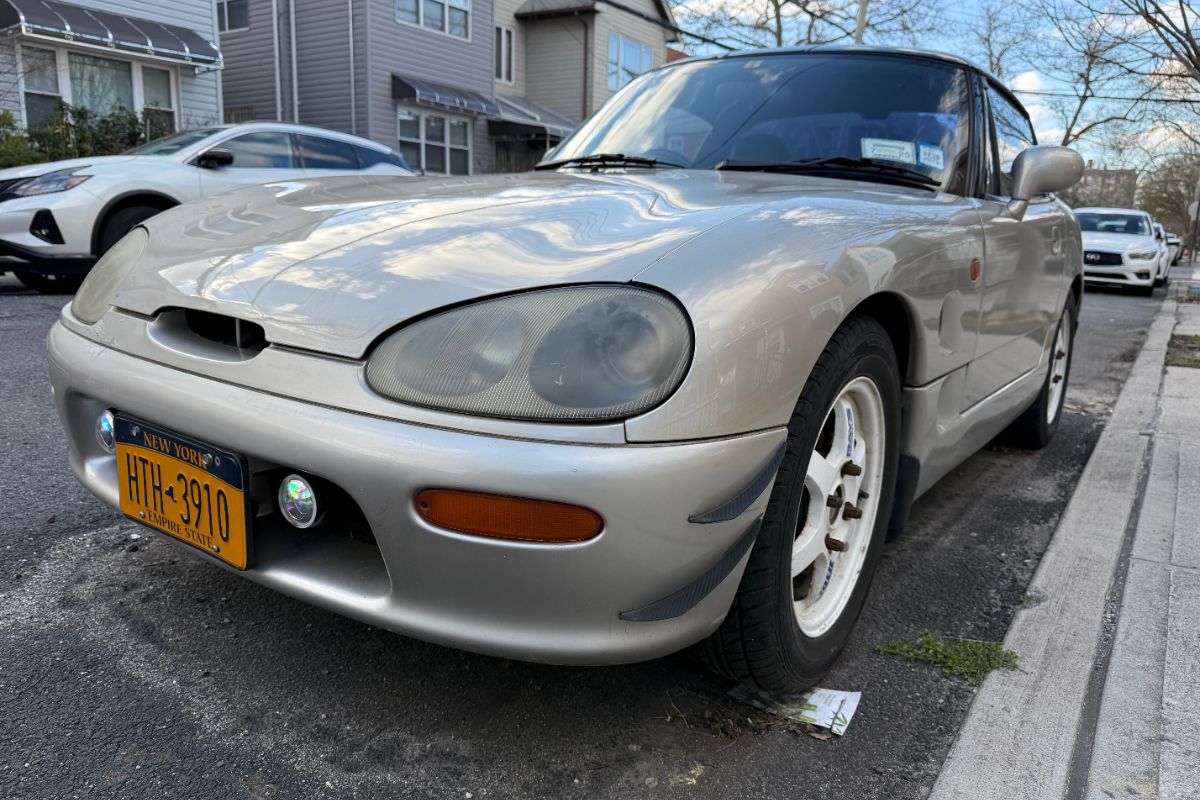
The Suzuki Cappuccino is a two-seat, rear-wheel-drive kei roadster built from 1991 to 1998 with a mid-mounted turbocharged three-cylinder engine. It was built to the Japanese kei class limits, which cap the engine at 660 cc, and it shows how much a small car can do with a light body. Clean cars are now collectible, and the kei class rules make them unusual in other markets.
Most buyers want one of three things: a legal route to bring a kei car home, a light weekend car, or a small project. The Cappuccino appeals to all three, but its import and registration rules are very different from those for a normal car, so check your market before you bid.
Which Cappuccino should you consider?
The Cappuccino was sold with the F6A turbo engine and a choice of manual or automatic transmission. The manual is the one most enthusiasts want, since it gives the car its character. Trim levels and roof types vary, and many cars have a removable roof panel that affects how the car feels and how it leaks. Check the roof and the seals closely, because water entry is a common problem.
The Cappuccino's engine is rated at 64 PS under the kei cap. That figure matters for the car's class in Japan and for the rules that apply to it, so check the factory sheet for the exact car.
Is a Cappuccino legal to import to the United States?
Under the US 25-year exemption, a vehicle at least 25 years old can be imported without meeting federal safety standards, and the age runs from the date of manufacture. Every Cappuccino built from 1991 to 1998 is more than 25 years old as of October 2026, so the age test is met for the whole production run. The importer declares the car on Form HS-7 under Box 1, according to NHTSA's importation FAQ. That page does not show an effective or last-updated date, so confirm the build date before buying.
Emissions and state registration are separate questions. Check your state DMV before buying, since registration can be harder for an unusual import, even when the age test is met.
What could go wrong with a Cappuccino?
Rust is the main risk. Check the sills, the floor, the rear subframe, and the area around the roll bar and mounts. Many cars have been repaired with filler, so look for uneven panel gaps and paint that does not match.
The mid-mounted turbo engine runs hot in traffic and at high boost. Check for oil and coolant leaks, and ask about the turbo and the intercooler. A car that has been tuned past its factory boost needs a closer look.
Some parts are harder to find than on mainstream cars, so ask about spares before you buy. Read the auction sheet grade guide to understand the inspector's notes if the car came through an auction.
Who should buy a Cappuccino?
Buy a Cappuccino if you want a small, light, rear-drive car for weekends and can accept limited parts supply. If you need a car for long highway trips or regular family use, a larger roadster such as the Mazda MX-5 guide suits you better.
Country notes
United States
The age test above is the verified federal rule. Check your state DMV for registration and emissions inspection before buying.
United Kingdom, Canada, Australia, and Germany
Import rules for this market are being confirmed. Check your national registry or customs authority before buying.
Frequently asked questions
Is a Cappuccino a good first kei car?
It can be for a driver who likes small roadsters. Expect rust and limited parts, and budget for both before committing.
Can I import a Cappuccino to the US now?
Yes on age, because every Cappuccino built from 1991 to 1998 passes the 25-year test as of October 2026. Confirm the build date and check state registration separately.
Is the manual or automatic better?
Most enthusiasts prefer the manual for its feel and for resale demand, but the automatic suits buyers who drive mostly in traffic.
How do I check for water leaks?
Look at the roof seals, door seals, and floor. Check for damp carpet and staining on the inside of the sills.
Disclaimer: Rules change. Confirm with your national registry or customs authority before buying. The US age test was checked against NHTSA on 2026-10-23.
Last reviewed: 2026-10-23. By the Japanese Auto World Editorial Team.
Photo: Suzuki Cappuccino, via Wikimedia Commons, licensed under CC BY-SA 4.0.
See also our guide to Japanese auction houses and the export documents checklist.