
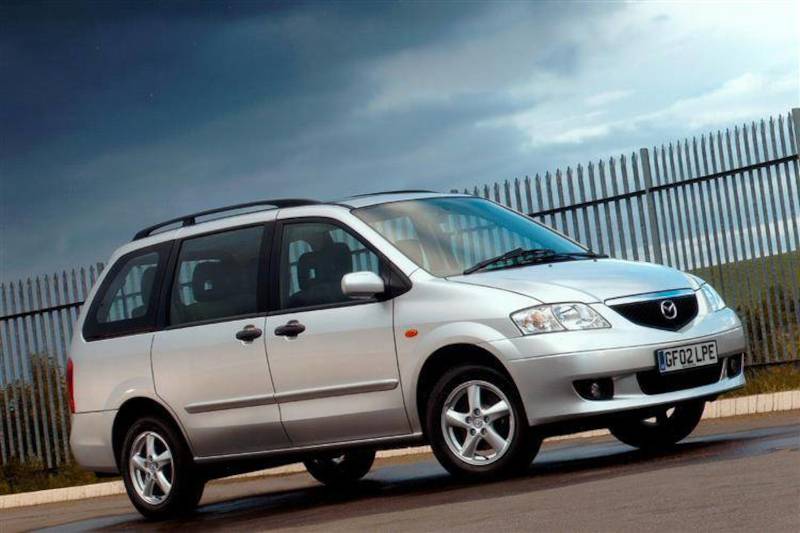
The Mazda MPV (Multi-Purpose Vehicle) is a family minivan produced by Mazda from 1988 to 2006 across two distinct generations. Despite being discontinued, the Mazda MPV remains a popular used car choice in export markets — particularly East Africa, Southeast Asia, and the Pacific — due to its spacious 8-seat layout, reliable petrol or diesel engines, and Mazda's reputation for build quality. In 2026, used Mazda MPV units from Japan remain available through exporters at highly competitive prices, making them a practical family vehicle option where budget and seat count are the primary considerations.
Mazda MPV Generations Overview
First Generation (1988–1999)
The original Mazda MPV was a body-on-frame vehicle with a front-engine, rear-wheel-drive layout. Available in both 2WD and 4WD configurations, it was known for its truck-like durability:
- Engines: 2.6L four-cylinder petrol, 3.0L V6 petrol
- 4WD option available on most trim levels
- 7–8 seat capacity
- Body-on-frame construction — robust for rough roads
- Ground clearance suited for African and Pacific road conditions
Second Generation (1999–2006)
The second-generation MPV moved to a unibody platform with front-wheel drive, bringing improved ride comfort and fuel economy at the cost of off-road capability. Key specifications:
- Engines: 2.0L four-cylinder, 2.5L V6 petrol; 2.0L diesel (select markets)
- Front-wheel drive only
- 7–8 seat capacity with flexible seating
- Improved NVH (noise, vibration, harshness) vs first generation
- Available with power sliding rear doors on later models
- Japanese domestic market models equipped with advanced audio and climate controls
Strengths of the Mazda MPV for Used Car Buyers
- Seating capacity: Genuine 7–8 passenger seating suitable for families and commercial shuttle use
- Mazda reliability: Mazda engines from this era have a strong record for longevity with regular oil changes
- Price: Well-priced in the used market due to age; FOB Japan prices typically USD 2,000–6,000 depending on condition
- Parts availability: Common mechanical components shared with other Mazda and Ford platforms
- Japanese market quality: Japan-spec models are typically better equipped and more carefully maintained than equivalent export-spec units
Weaknesses and Considerations
- Age: All MPV units are now 18+ years old — buyers must budget for age-related maintenance (rubber seals, timing belts, coolant hoses)
- Rust: Inspect underbody and wheel arches carefully, especially on units sourced from coastal Japanese prefectures
- Fuel economy: V6 versions are thirsty by modern standards — the 3.0L V6 averages approximately 12–14L/100km
- Parts for older models: Some first-generation-specific trim parts are discontinued — mechanical parts remain available but body panels can be difficult
- No modern safety systems: Pre-2000 vehicles lack airbags, ABS, or stability control on base trims
Who Is the Mazda MPV Best Suited For?
The Mazda MPV is best suited for buyers who:
- Need genuine 7–8 seat capacity on a limited budget
- Operate in markets where the vehicle's age does not exceed import restrictions
- Have access to a competent Mazda mechanic for age-related maintenance
- Prioritise space and durability over fuel economy and modern technology
- Are considering the first-generation 4WD for use on unpaved roads (East Africa, Pacific Islands)
Alternatives to Consider in 2026
If the Mazda MPV's age is a concern, consider these alternatives available from Japanese exporters:
- Toyota Noah / Voxy (2001–2014): More modern, similar seating, better fuel economy
- Honda Odyssey (2003–2008): Luxury MPV option with more features
- Nissan Serena (2005–2010): Reliable 7-seater with sliding doors
- Toyota Alphard (2002–2008): Premium MPV with lounge-style seating — more expensive but highly sought after
Buying a Used Mazda MPV from Japan: What to Check
- Request an auction sheet — for this age vehicle, Grade 3.5 is realistic; Grade 4 indicates exceptional preservation
- Check the timing belt service history — replacement is due every 100,000 km on these engines
- Inspect power sliding door mechanisms if present — these are a common failure point
- Check for transmission slip on V6 automatics — AT fluid condition is critical
- Confirm your country's age restrictions — some markets prohibit vehicles over 10–15 years old
- Verify underbody condition: first-gen 4WD models can suffer from differential and transfer case wear
Bottom Line
The used Mazda MPV is a practical, affordable family vehicle for buyers who prioritise seating capacity and Mazda's build quality over modern technology. Its age means buyers should set aside a maintenance budget and work with a JUMVEA-registered exporter who can provide detailed inspection photos. The first-generation 4WD variant is particularly valued in markets with rough road conditions. For buyers in markets with strict age import limits, a newer alternative like the Toyota Noah or Nissan Serena may be the more practical choice.
- Best for: Large families, shuttle operators, budget-conscious 7–8 seat buyers
- Avoid if: Your country has an import age restriction below 15 years, or you need modern safety technology
- Price guide: USD 2,000–6,000 FOB Japan depending on generation, trim, and condition grade