
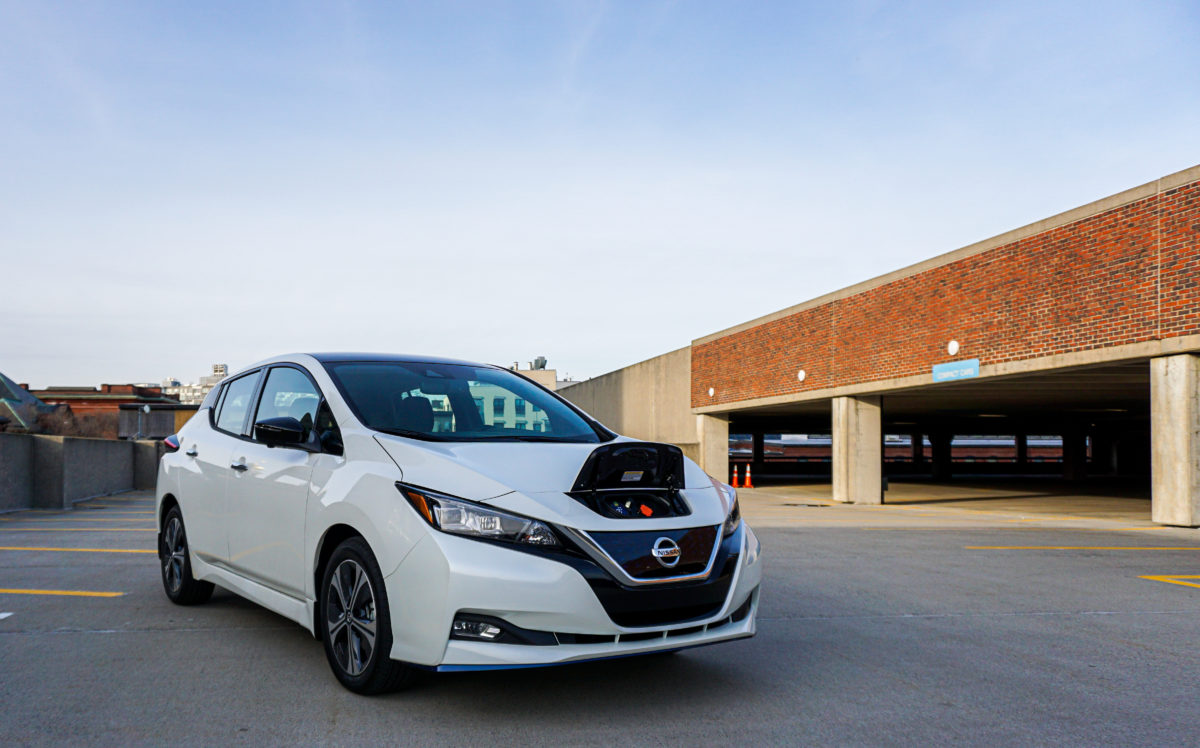
We Tried City Living with an Electric Car: A Real-World Assessment for 2026
Electric vehicles are increasingly practical for urban driving, but the experience varies enormously depending on city, charging infrastructure, and vehicle choice. This article draws on real-world experience of running an EV in a major city in 2025-2026, with particular relevance to buyers in Japan, the Middle East, and East African urban centers considering their first EV purchase.
The Vehicle: Nissan Leaf (2020, 40 kWh)
The Nissan Leaf remains one of the most widely available used Japanese EVs globally. A 2020 40 kWh Leaf with 50,000 km can be found at Japanese auction for approximately 1,200,000-1,600,000 yen (USD 8,000-10,500). It offers 270 km of official WLTP range, though real-world urban range in varying temperatures runs 180-230 km — adequate for most city use patterns where daily driving is under 100 km.
Daily Charging: The Key to EV City Life
The single most important factor for successful city EV ownership is access to home or workplace charging. A standard 3-pin household socket (Mode 1 charging) delivers approximately 10 km of range per hour — sufficient for topping up overnight for a typical 40 km daily commute. A dedicated 7.2 kW home wallbox charger (installed cost USD 400-800) fully recharges a 40 kWh Leaf in approximately 6 hours and is the right investment for any EV owner.
Public fast charging (CHAdeMO, the Nissan Leaf's standard in Japan) is well-developed in Japan and growing in the UAE and South Africa, but remains sparse in most East African cities. This is the primary barrier to EV adoption in those markets for 2026.
Running Costs vs. Equivalent Petrol Car
In Japan, with residential electricity at approximately 27 yen/kWh, a full 40 kWh charge costs around 1,080 yen (USD 7.20) for approximately 200 km of real range — equivalent to 3.6 yen/km. A comparable 1.5L Toyota Yaris at 18 km/L and fuel at 170 yen/L costs 9.4 yen/km. The Leaf costs 62% less per kilometer to run in Tokyo. In the UAE at 0.09 AED/kWh electricity, savings are even more dramatic.
Servicing and Maintenance
The Leaf requires no oil changes, no spark plugs, no air filter replacements, no transmission fluid, and no exhaust system maintenance. Scheduled service costs approximately 15,000-20,000 yen per year in Japan, covering brake fluid, cabin air filter, tire rotation, and system checks — compared to 35,000-50,000 yen for a comparable petrol vehicle. Brakes last longer due to regenerative braking reducing wear.
Battery Degradation Reality
Battery capacity loss is the most important long-term consideration for used Leaf buyers. The 2020 40 kWh Leaf uses Nissan's lizard battery chemistry with improved thermal stability vs. earlier models. A 2020 Leaf with 50,000 km typically retains 85-90% of original capacity. Check battery health via the Leaf's built-in bar indicator (12 bars = full health) or a LeafSpy OBD-II app reading before purchasing.
Verdict for City Use
For urban drivers with home or workplace charging access, a used Nissan Leaf or other Japanese EV is an excellent city car in 2026. Running costs are dramatically lower than petrol equivalents. The key requirements: reliable home charging and daily driving under 150 km. For cities without reliable home charging access or where daily distances exceed 150 km regularly, a hybrid (Prius, Aqua) or petrol vehicle remains more practical.
Key Facts
- Vehicle tested: 2020 Nissan Leaf 40 kWh
- Used auction price (2026): USD 8,000-10,500
- Real-world urban range: 180-230 km per charge
- Running cost vs. petrol: 60-65% cheaper per km in Japan
- Key requirement: Home or workplace charging access
- Recommendation: Excellent for urban use with home charging; check battery health via LeafSpy before buying used